
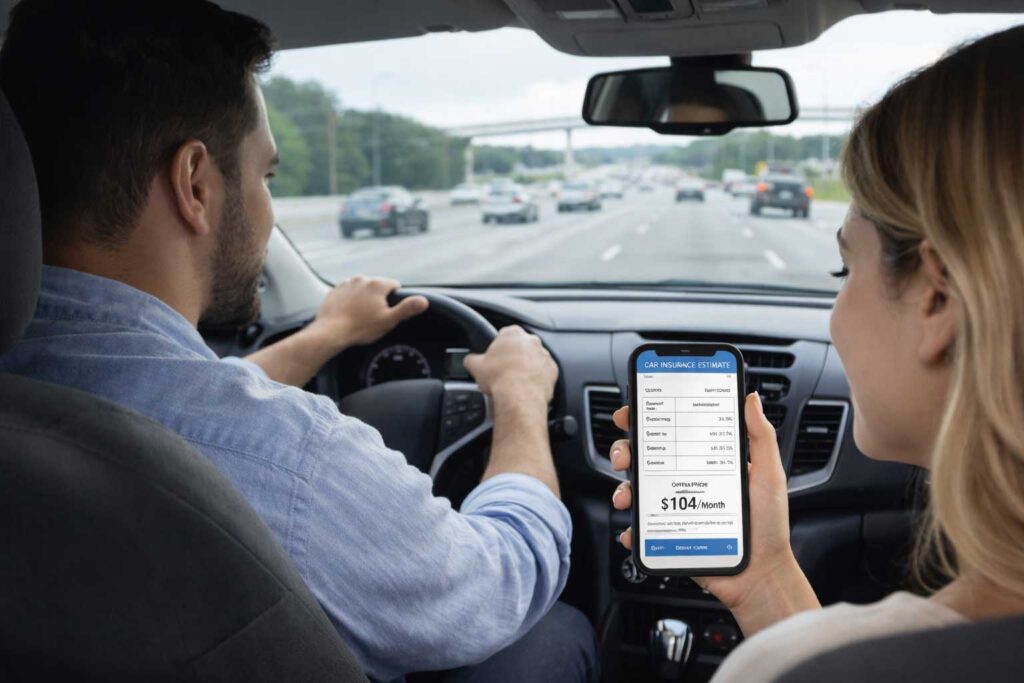
Washington Auto Insurance Estimate
Washington Car Insurance Calculator
Estimate your potential Washington car insurance cost based on your location, driver profile, vehicle, coverage preferences, and driving history.
Estimated Washington car insurance cost
$0 – $0 per month
This educational estimate is not a binding insurance quote. Actual rates depend on the insurer, driver, vehicle, location, coverage selections, discounts, underwriting, and policy terms.
By CarInsuranceEstimate.org Editorial Team
Informational content for Washington drivers researching car insurance costs, state requirements, coverage options, and quote comparisons.
Created on July 11, 2026
Last updated on July 11, 2026
Washington car insurance prices can vary considerably between drivers. Your age, driving and claims history, vehicle, annual mileage, garaging location, selected coverage, liability limits, deductibles, discounts, and other insurer-approved rating information may affect the amount you pay.
The Washington Car Insurance Calculator above provides educational monthly, six-month, and annual estimates based on the categories you select. It is designed to help you see how common rating variables may change a modeled insurance cost before you request personalized quotes. Reviewing the common concerns about instant car insurance quotes can help you compare preliminary prices more carefully.
The result is an estimated range, not a guaranteed premium, offer of coverage, or binding insurance quote. Insurance companies use their own approved rates, underwriting rules, eligibility standards, discounts, and policy forms. CarInsuranceEstimate.org is an independent informational website and is not an insurance company, insurance agency, or Washington government agency.
Washington Minimum Car Insurance Requirements
Most Washington drivers satisfy the state’s financial responsibility requirement by carrying automobile liability insurance. The minimum liability limits are commonly written as 25/50/10. [1]
These limits provide up to $25,000 for bodily injury or death to one person, $50,000 for bodily injury or death to two or more people in one accident, and $10,000 for injury to or destruction of another person’s property.
Bodily Injury per Person
This is the maximum amount available under the minimum policy for covered bodily injury or death involving one person in one accident.
Bodily Injury per Accident
This is the total minimum bodily injury liability limit for two or more people injured or killed in one accident, subject to the per-person limit.
Property Damage per Accident
Property Damage Liability may help pay for covered damage an insured driver causes to another vehicle or other property.
Washington Minimum Coverage vs. Full Coverage
Washington’s required liability coverage primarily helps with covered injuries and property damage an insured driver causes to other people. Property Damage Liability typically does not pay to repair the policyholder’s own vehicle. [2]
The term full coverage is informal rather than a standardized insurance product. It commonly refers to a policy that combines liability insurance with collision and comprehensive coverage, but the actual limits, deductibles, exclusions, endorsements, and optional protections vary by insurer and policy. Drivers focused on affordability can review how to evaluate cheap full coverage car insurance without overlooking important policy differences.
| Coverage level | What the calculator models | Important consideration |
|---|---|---|
| Washington minimum | A lower-cost policy centered on at least $25,000/$50,000 in Bodily Injury Liability and $10,000 in Property Damage Liability. | It generally does not include collision or comprehensive protection for damage to the insured vehicle. |
| Standard protection | Liability protection above the minimum or a policy with selected optional coverages. | This is a calculator category, not a standardized package sold by every insurer. |
| Full coverage | A modeled combination of liability, collision, and comprehensive coverage. | Collision generally addresses covered crash damage to the insured vehicle. Comprehensive generally addresses covered non-collision losses such as theft, vandalism, fire, or contact with an animal. |
| Higher-limit full coverage | Full coverage with a higher modeled liability and physical-damage baseline. | It generally produces a higher estimate because the model assumes broader financial protection. |
What Affects Car Insurance Costs in Washington?
Washington’s Office of the Insurance Commissioner explains that insurers generally start with a base rate and adjust it using factors related to the driver, vehicle, location, policy, and claims experience. [3]
Vehicle Details
The make, model, year, safety characteristics, repair cost, replacement value, and theft exposure may affect the premium.
Driving and Claims History
Traffic history, driving experience, prior accidents, and the number of claims associated with the policy may influence pricing and eligibility.
Garaging Location
Where the vehicle is normally kept may reflect differences in traffic density, theft, weather exposure, repair costs, and claim frequency.
Annual Mileage and Use
Mileage, commute distance, business use, delivery activity, and other usage information may change the amount of road exposure an insurer evaluates.
Coverage and Deductibles
Higher limits and additional coverage generally cost more. Higher collision or comprehensive deductibles may lower the premium but increase out-of-pocket costs after a covered claim.
Other Rating Information
Depending on applicable law and the insurer’s approved rating plan, age, household drivers, credit history, discounts, and other permitted information may affect the final premium.
How the Washington Car Insurance Calculator Works
The calculator uses May 2026 Washington marketplace data published by Experian as reference points. Experian reported average monthly costs of approximately $128 for minimum coverage, $182 across all analyzed policies, and $241 for full coverage. The calculator uses the $128 minimum-coverage and $241 full-coverage figures as its principal reference values. Its standard and higher-limit categories are editorial modeling values created to provide intermediate and expanded coverage comparisons. These figures are not insurer quotes, approved rates, or guaranteed statewide prices. Drivers can also use the site’s car insurance cost analyzer for another educational comparison of pricing factors. [9]
Select a Coverage Baseline
The model begins with an internal Washington reference value for minimum, standard, full, or higher-limit coverage. These values are modeling assumptions, not official statewide averages.
Apply Driver Factors
The selected age group and driving-record category apply multiplicative adjustments to the coverage baseline.
Apply Vehicle and Usage Factors
Vehicle year, vehicle type, annual mileage, and deductible apply additional modeled adjustments. The deductible does not change the calculator’s minimum-liability estimate.
Display an Estimated Range
The calculator rounds the modeled monthly amount and generally displays a range approximately 10% below and 10% above it, followed by six-month and annual projections.
Ways to Compare Washington Car Insurance Costs
Washington’s insurance regulator recommends shopping around, asking about discounts, and considering deductible changes only when the higher out-of-pocket amount would remain affordable. [3]
Compare Equivalent Quotes
Use the same drivers, vehicles, liability limits, optional coverages, deductibles, and payment frequency for each quote.
Ask About Discounts
Ask each insurer about discounts for which the household may qualify, but confirm that each quoted discount is actually included.
Choose a Manageable Deductible
A higher deductible can reduce the premium for applicable coverage, but the policyholder should be able to pay it after an unexpected loss.
Check Company Information
Verify that the company and producer are authorized in Washington and consider complaint information and claims-service reputation, not only price. It is also useful to compare car insurance providers using the same limits, deductibles, and optional coverages.
Keep Information Accurate
Confirm the VIN, garaging address, mileage, usage, drivers, prior coverage, and other application details before accepting a quote.
Review Each Renewal
Recheck limits, deductibles, optional coverage, listed drivers, and discounts when the policy renews or household circumstances change.
Personal Injury Protection in Washington
Personal Injury Protection, commonly called PIP, is optional in Washington, but automobile insurers must offer it. A consumer who does not want PIP must reject it in writing; otherwise, the insurer may add it to the policy and charge for it. [4]
Medical and Hospital Costs
PIP may help pay eligible medical and hospital expenses for covered people injured in an automobile accident.
Lost Wages
Subject to the policy’s waiting period, limits, and conditions, PIP may replace part of the income lost because of accident-related disability.
Replacement Services
PIP may help pay eligible non-family providers for services the injured person cannot perform because of the accident.
Regardless of Fault
PIP can apply without first establishing fault, although exclusions, benefit limits, documentation requirements, and treatment conditions still apply.
Underinsured Motorist Coverage in Washington
Washington law generally requires underinsured motorist protection to be included with or offered alongside covered automobile liability policies unless the named insured or spouse rejects all or part of the coverage in writing. [5]
The statutory protection can address qualifying bodily injury, death, or property damage caused by an underinsured vehicle, hit-and-run vehicle, or phantom vehicle, subject to the policy and applicable law.
Uninsured Drivers
Coverage may help when an at-fault driver has no applicable liability insurance for a covered loss.
Underinsured Drivers
Coverage may apply when the responsible driver’s available liability limits are insufficient for qualifying damages.
Hit-and-Run or Phantom Vehicles
Protection may apply to certain hit-and-run or no-contact phantom vehicle accidents. Washington law includes special reporting and corroboration requirements for phantom vehicles.
Written Rejection
A named insured or spouse may reject underinsured motorist bodily injury or property damage coverage in writing, subject to the statute’s requirements.
Proof of Insurance and Driving Without Coverage
Washington drivers must carry proof of liability insurance and show it when requested by law enforcement. Driving without the required insurance can result in a fine of $550 or more. [1]
Carry Proof of Insurance
Keep current proof of coverage available in the vehicle or in an accepted electronic format and verify that the policy information is accurate.
$550 or More
Washington’s Department of Licensing warns that driving without required insurance can lead to a fine of $550 or more.
Unpaid Accident Damages
If an uninsured driver is at fault and does not pay resulting damages or injuries, the driver license may be suspended under Washington’s financial responsibility process.
Other Approved Methods
Washington recognizes limited alternatives such as an approved certificate of deposit, qualifying liability bond, or self-insurance for eligible vehicle fleets.
What to Do After a Car Accident in Washington
After an accident, prioritize safety, call 911 when someone may be injured, remain at the scene, document available information, and contact the insurer promptly. Washington’s insurance regulator also recommends reviewing the claims process stated in the policy. Additional car insurance tips and advice can help drivers organize policy and claim information before a loss occurs. [6]
Check for Injuries
Move out of immediate danger when possible, request emergency help when needed, and avoid actions that could create additional risk.
Document the Incident
When safe, collect driver, vehicle, insurance, witness, location, and damage information without interfering with emergency responders.
Report the Claim Promptly
Follow the policy’s reporting requirements, protect the vehicle from further damage when reasonably possible, and keep receipts for towing or other necessary expenses.
Keep a Written Record
Save photographs, estimates, receipts, claim numbers, correspondence, and notes about conversations with the insurer or other involved parties.
Frequently Asked Questions About Washington Car Insurance
What car insurance is required in Washington?
Most drivers satisfy Washington’s requirement by carrying at least $25,000 in Bodily Injury Liability for one person, $50,000 for two or more people in one accident, and $10,000 in Property Damage Liability. [1]
Is Washington a mandatory no-fault insurance state?
Washington does not require every automobile policyholder to buy PIP. Insurers must offer PIP, but the consumer may reject it in writing. PIP can pay certain covered benefits regardless of who caused the accident. [4]
Does Washington minimum insurance cover my own vehicle?
Generally, the minimum liability coverage pays eligible claims for injuries or property damage caused to others. Collision and comprehensive coverage are normally the coverages used for qualifying physical damage to the insured vehicle. [2]
Does the ZIP code change the calculator’s Washington estimate?
No. The current calculator uses the ZIP code to validate that the entry falls within supported Washington ZIP-prefix ranges. It does not assign different rates to Seattle, Spokane, Tacoma, or other Washington locations.
Are the calculator’s Washington rates official averages?
No. The coverage baselines are internal editorial modeling values used to demonstrate how selected factors can change an estimate. They are not rates approved for a particular insurer, official state averages, or guaranteed market prices.
Does the calculator include PIP or underinsured motorist coverage?
It does not separately price either coverage. A real insurance quote may change when PIP or underinsured motorist protection is accepted, rejected, or purchased with different limits.
Why can a real quote differ from the calculator?
Insurers may consider more detailed driver, household, vehicle, location, claims, prior-coverage, credit, discount, payment, and underwriting information than the calculator collects.
What happens if I drive without insurance in Washington?
Washington’s Department of Licensing states that driving without required insurance can result in a fine of $550 or more. An uninsured at-fault driver may also face a license suspension for failing to pay accident-related damages or injuries. [1]
References
- Washington State Department of Licensing, Mandatory Insurance. Source ↩
- Washington State Office of the Insurance Commissioner, Learn How Auto Insurance Works. Source ↩
- Washington State Office of the Insurance Commissioner, How Insurance Companies Set Auto Premiums. Source ↩
- Washington State Office of the Insurance Commissioner, Personal Injury Protection (PIP). Source ↩
- Washington State Legislature, RCW 48.22.030 — Underinsured Motorist Coverage. Source ↩
- Washington State Office of the Insurance Commissioner, Filing an Auto Insurance Claim. Source ↩
- Washington State Office of the Insurance Commissioner, What to Do If You’re Hit by an Uninsured or Underinsured Driver. Source ↩
- Washington State Office of the Insurance Commissioner, Washington State’s Mandatory Auto and Motorcycle Insurance Law. Source ↩
- Experian, Average Cost of Car Insurance in Washington for 2026. Source ↩